
Authors / Meaning with the Machines
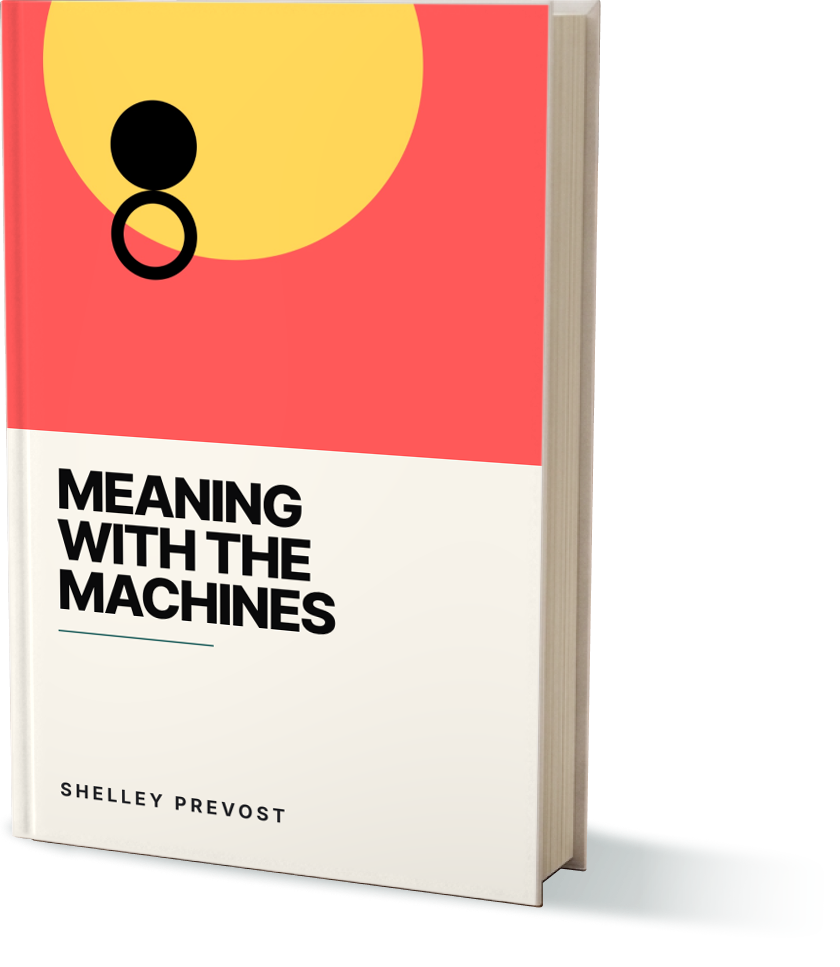
Working coverAdvance reading copy. Not the final cover.
§ Bearings lane · Coming March 2027
One email when Meaning with the Machines is ready to order, with the first look at the cover. Your address goes to Shelley and the press, and nowhere else.
Unsubscribe any time.
AI is taking over the work we built our identities on. Shelley Prevost has been asking whether machines could make people happier since 2010, as a therapist, a venture partner, and a tech CEO, and now she builds with them every day. Her answer in Meaning with the Machines is that what’s left for us is the interior: who we are, how we connect, and what we’re for when we’re no longer what we produce.
This is not a book about the economics, and it is not a book that pretends the hard part isn’t coming. It names the losses honestly, then turns to the questions that remain when survival is off the table: purpose that isn’t a job, attachment to machines that are kind to us back, raising kids for a world that won’t sort them by employment, and the moral case for good people shaping AI now rather than leaving it to someone else.
Written fast, because the ground is moving fast, and open about how it was made. The book argues for meaning with the machines, and it was made with them.
“What does that mean for a human when you have to rethink your identity and who you are if it’s no longer about what you produce?”
Shelley Prevost
Shelley Prevost is a therapist, coach, and Enneagram practitioner, the co-founder of Big Self School, and the builder of Emma, an AI coaching tool and marketplace. She was Director of Happiness and a partner at The Lamp Post Group, Chattanooga’s venture firm and incubator, and CEO and co-founder of Torch, a parental-control router for families. She has been thinking about machines and human flourishing for fifteen years, and she now manages a working team of AI agents every day.
She lives on Signal Mountain, Tennessee, with her husband, Chad, and their sons.
About the lane: A Bearings book gives the reader their bearings: it changes how they see what they are already doing, then sends them somewhere.
Read about the Bearings lane →